🚨 One Smartphone, 16 Children, and Questions Investigators Are Still Trying to Answer
THE DIGITAL BLACKOUT: THE CHILLING TECH NARRATIVE IN THE OHIO HOUSE OF HORRORS When police accidentally exposed the horrific house of ho...
 THE DIGITAL BLACKOUT: THE CHILLING TECH NARRATIVE IN THE OHIO HOUSE OF HORRORS
When police accidentally exposed the horrific house of horrors in Hamden, Ohio, rescuing 16 feral siblings from a microscopic 12×12 room, true crime communities on TikTok and Reddit immediately caught onto a bizarre tech anomaly. It exposes the ultimate form of calculated control.
While the 16 children were kept entirely hidden from the modern world—living in complete darkness with zero knowledge of the internet, cell phones, or the existence of 911—their father was surviving as a gig-economy DoorDash driver. A delivery driver requires a smartphone, continuous 4G data, and active GPS mapping to function every single day. Yet, looking at the exterior of the house, internet sleuths noticed a total lack of standard digital infrastructure. How did the captors weaponize a strict “Tech Monopoly” to keep 16 human beings completely erased from the digital grid while exploiting the internet for their own financial gain?
The dark reality of the “Digital Blackout” strategy and the terrifying paradox that kept a family invisible in a hyper-connected world 
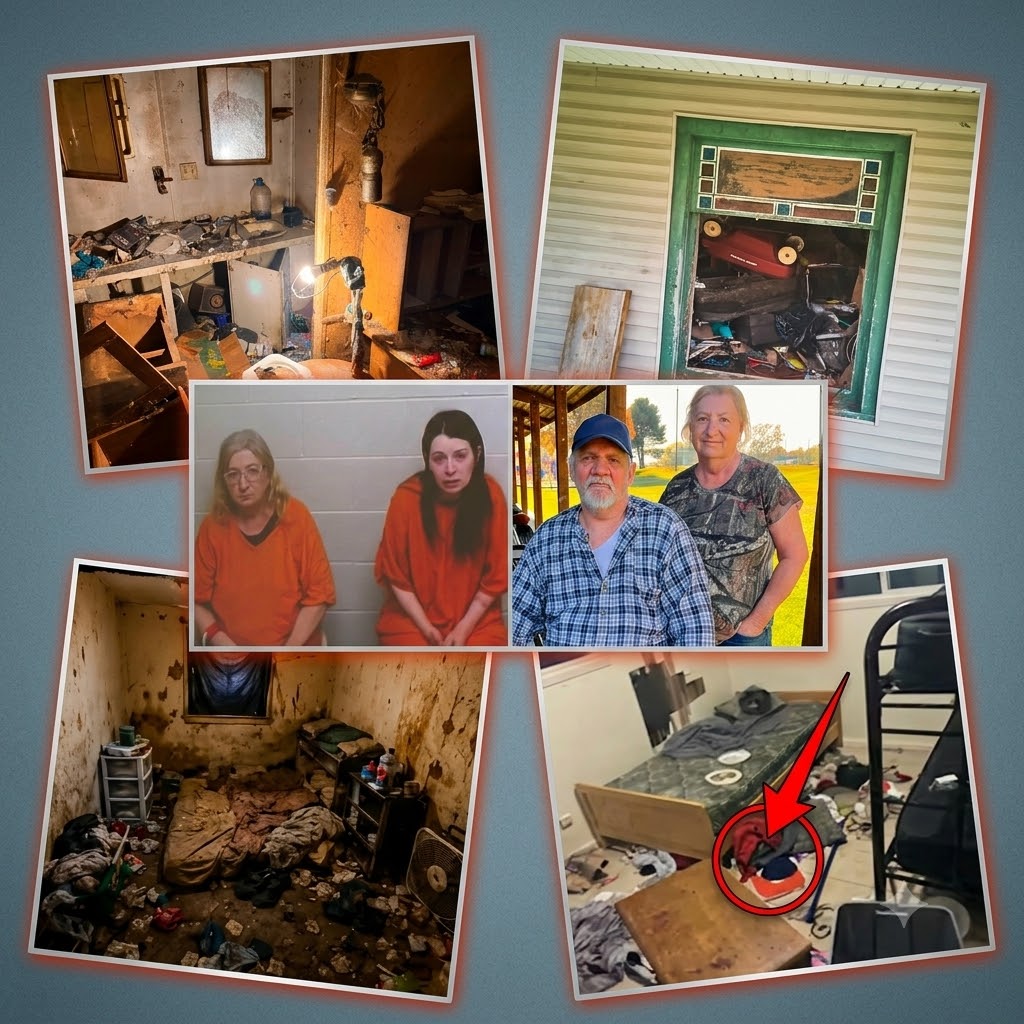
In an age where every individual leaves an inescapable trail of data, data-mined footprints, and digital breadcrumbs, the Siders family of Vinton County, Ohio, managed the impossible. For nearly two decades, they fluidly relocated across five different rural counties, raising 16 children who, on paper, simply did not exist.
Following the July 1, 2026 raid that rescued the siblings from a squalid, bacteria-ridden $3.5\text{m} \times 3.5\text{m}$ (12×12 feet) room, armchair detectives on Reddit’s r/TrueCrime and internet tech sleuths have begun dissecting the mechanics of their evasion. They have uncovered what is now being called the “Digital Footprint Blackout Theory”—a chilling case of tech weaponization where the tools of the modern internet were strictly monopolized by the captors to maintain absolute control over their victims.
The DoorDash Connection Meets the Iron Curtain
The foundation of the digital anomaly stems from the household’s economy. In court filings, defense attorney Thomas Stolly noted that the family’s primary provider, 36-year-old Gary Siders Jr., supported the household of 18 by working as a delivery driver for DoorDash.
To the internet’s network of true crime investigators, this detail exposed a brilliant, terrifying hypocrisy. Operating as a gig-economy driver inherently requires a modern smartphone, constant high-speed cellular data or 4G LTE, real-time GPS tracking, and continuous digital communication with restaurants and customers.
“The father was actively plugged into the hyper-connected digital grid every single day,” argued a tech-focused true crime creator on TikTok whose video garnered millions of impressions. “Yet, inside that home, there was an absolute iron curtain. Cư dân mạng (Netizens) analyzing photos of the boarded-up property pointed out the complete lack of standard residential infrastructure—no satellite dishes, no visible cable drops, and windows sealed with heavy black tarps. The parents created a domestic digital monopoly: technology was used as an outbound financial tool, but forbidden from flowing inbound to the children.”
Erasing an Entire Generation
By enforcing a strict digital blackout within the 12×12 room, the Siders family successfully bypassed the modern tracking systems that typically flag child abuse. Because the children were never registered for online schooling, had no medical portals, and never interacted with smart devices, they generated zero data points. In 2026, a person without a digital footprint is effectively invisible to state algorithms and social services.
On a prominent True Crime Discord server, behavioral analysts noted that this digital isolation had a devastating impact on the children’s cognitive development. Several of the 16 siblings were found to be completely non-verbal, and an 18-year-old developmentally disabled girl could not even write her own name.
Without access to television, smartphones, or any window into the outside world, the victims had no concept of modern society. They did not know that a device could connect them to help, nor did they even comprehend the existence of emergency services like 911. The smartphone in the father’s pocket was a portal to the world for him, but to the children, it was an abstract object of absolute authority.
The Silent House by the Tracks
The physical layout of the Hamden property further enabled this digital and physical isolation. The house sat tucked away alongside a steep railroad embankment on Ohmer Street, heavily obscured by thick brush and trees. While it was technically visible from the road, the lack of modern utility lines running to the home reinforced the community’s perception that it was merely an abandoned or deeply impoverished structure.
Neighbors like Joseph Stewart, who lived just three houses down for six years, admitted they saw “no kids at all” since the family moved in. The adults used the chaotic, off-grid aesthetic of the home to mask their active digital engagement, blending in as low-income recluses while the father operated seamlessly in local fast-food lobbies and suburban neighborhoods.
The Hard Drive Grid
As Gary Siders Jr., his wife Elizabeth, and his elderly parents remain held on $300,000 bonds facing 16 counts of felony child endangerment, digital forensics teams from the Ohio Bureau of Criminal Investigation (BCI) are reportedly preparing to analyze the family’s seized electronic devices.
The 16 rescued children remain in the temporary custody of the Ohio Department of Job and Family Services (ODJFS), where specialists face the unprecedented challenge of introducing “feral” individuals not just to physical society, but to a technological world that they are completely unequipped to understand. The impending trial is expected to shed light on how cell phones, gig-economy accounts, and digital banking were manipulated to keep an entire generation of children trapped in the dark ages.
For an on-the-scene report from local journalists covering the immediate aftermath of this shocking raid and the official law enforcement press conference, you can watch this ABC News report on the Ohio child neglect rescue. This video provides crucial visual context regarding the deplorable conditions of the home and the initial charges brought against the Siders family.



Post a Comment